What E&C offers
See the service in the context of the whole property.
E&C lists installation of pipes for water, drainage, and other underground systems used in construction projects.
Discuss your property ↗Water · Drainage · Project-specific below grade
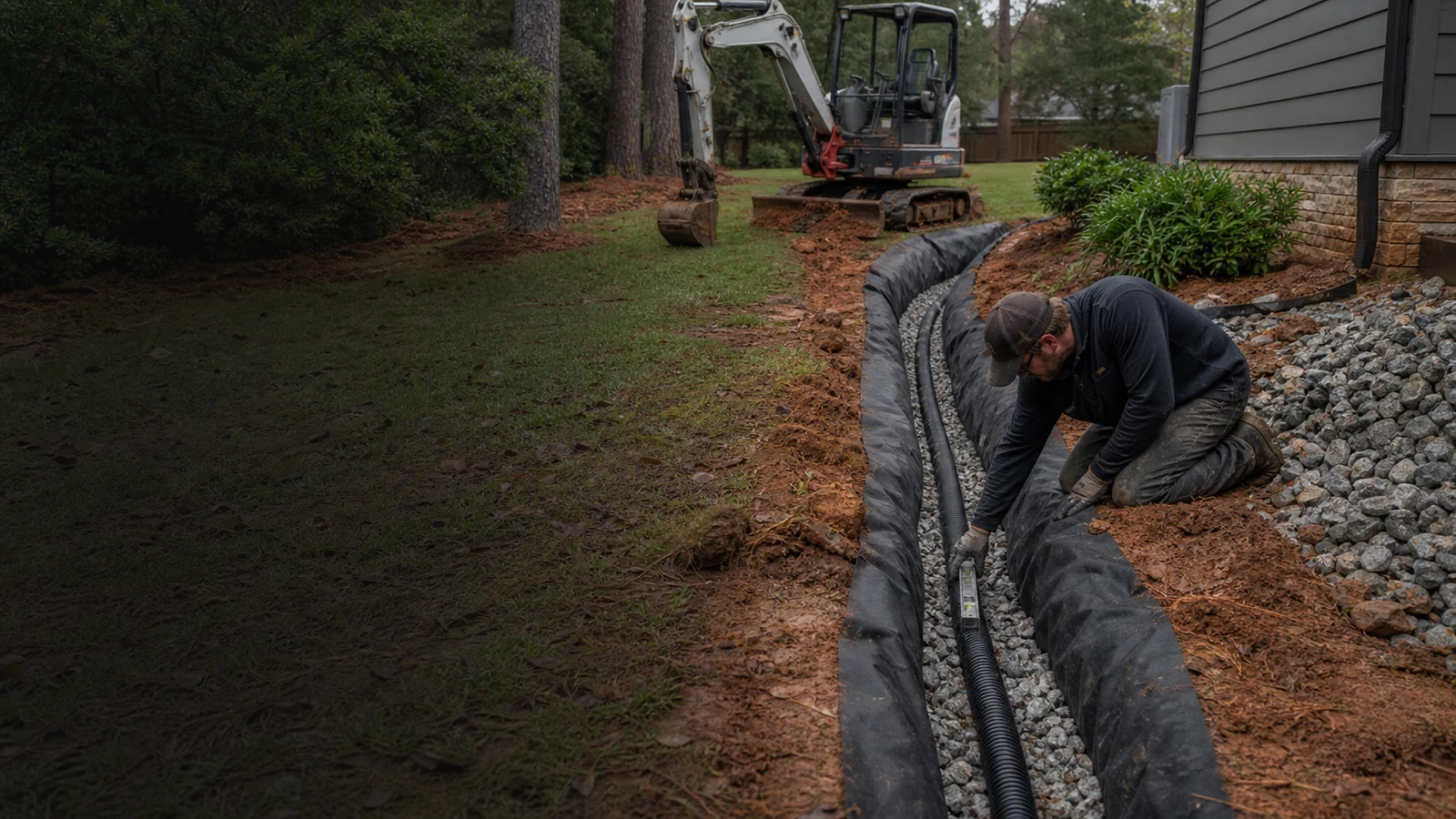
Start with where water is appearing, where it needs to go, and what surfaces the route will cross. E&C lists water and drainage pipe installation; the exact system is confirmed for the property.
Concept image; not completed E&C work
Underground systems services
E&C lists water pipes, drainage pipes, and other project-specific underground systems. A French drain is one possible drainage conversation; fit, discharge, routing, and restoration are confirmed for the property.
What E&C offers
E&C lists installation of pipes for water, drainage, and other underground systems used in construction projects.
Discuss your property ↗This illustration explains the service and is not completed E&C work. Exact fit, dimensions, requirements, and responsibility are confirmed for the actual property.
Drainage below the finish
Below-grade work has two visible moments: the open route that makes every dependency clear, and the restored surface people live with afterward.
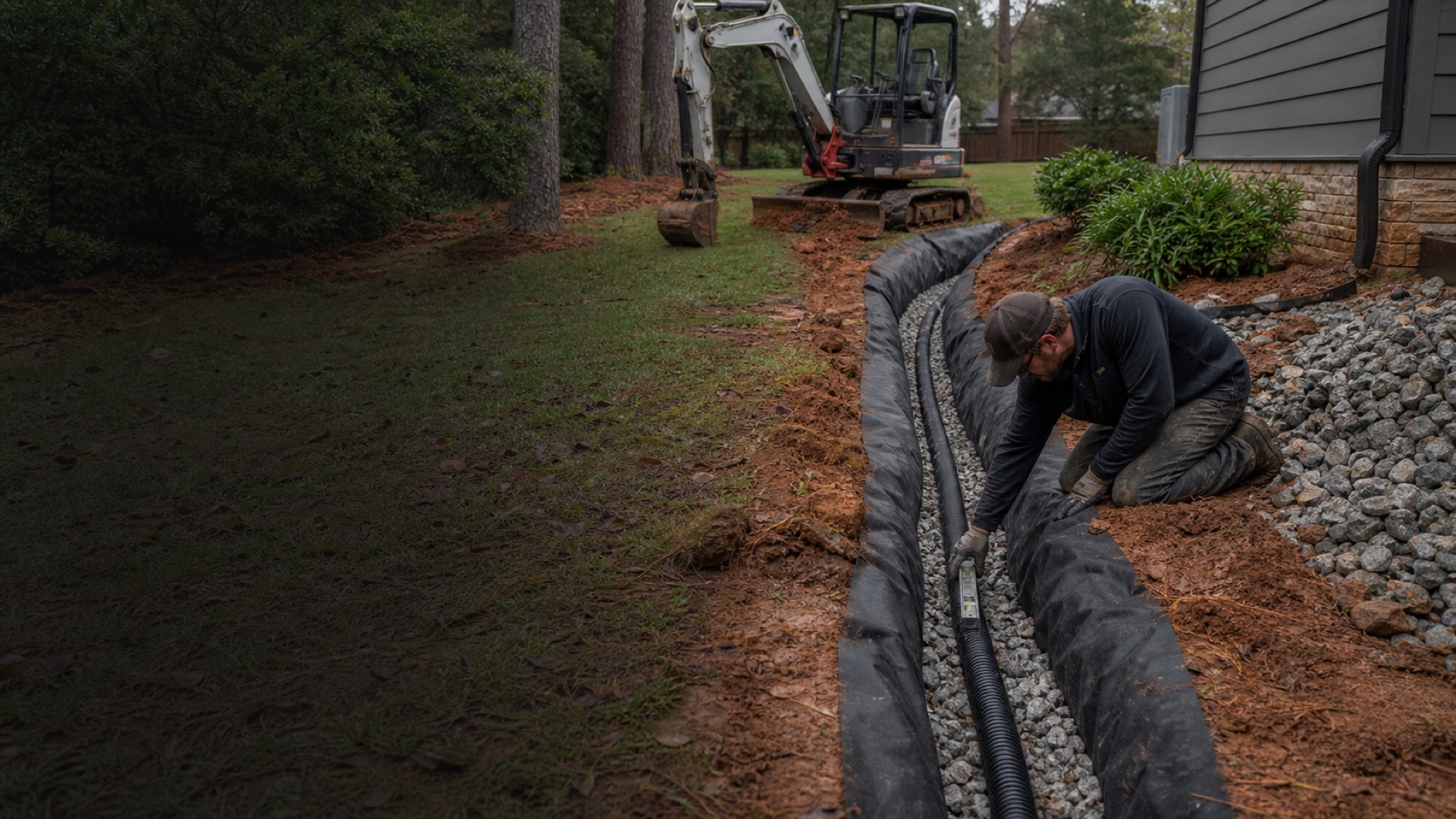
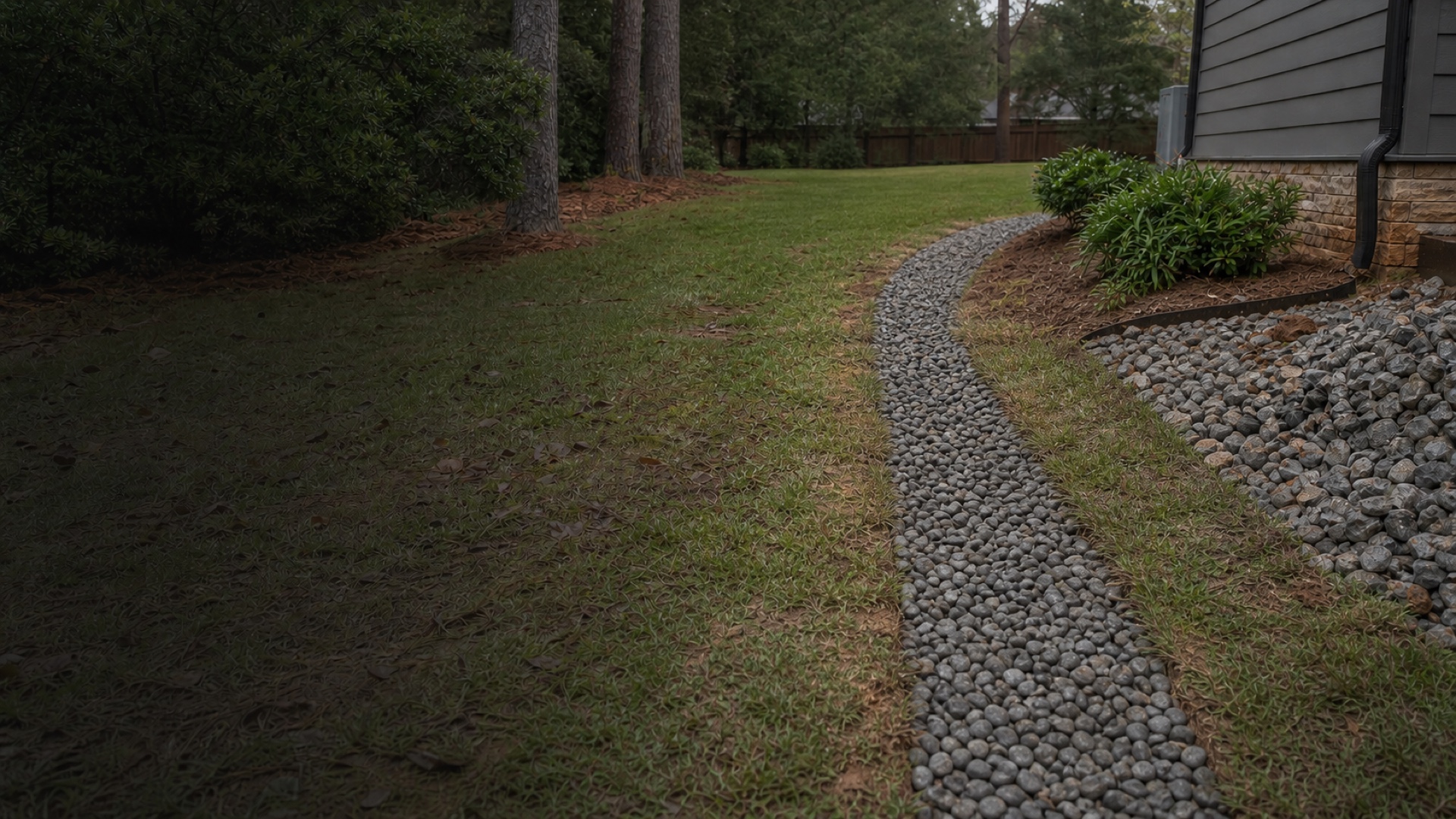
Concept image; not completed E&C work
Drainage concept · Residential French drain
This concept shows geotextile, washed stone, perforated pipe, closure, and restoration. The actual system and discharge point remain property-specific.
Start your project briefConcept image; not completed E&C work
From existing condition to finished handoff
Typical project logic; exact scope, engineered details, approvals, and sequencing vary by site.
Locate the route
Define the project-specific pipe route, required elevations, connection context, applicable utility-locate status, and known conflicts before excavation.
Open a trench appropriate to the site and depth, with access and protection suited to the actual conditions.
Build below grade
Establish the specified bedding so the pipe can be supported along its intended alignment.
Install and connect the specified water or drainage pipe to the required alignment and, where applicable, slope or grade.
Close and restore
Complete the inspection or testing required by the particular project before the system is concealed.
Place initial embedment, backfill and compact in the required sequence, then restore the surface or hand off to the next scope.
Concept image; not completed E&C work The exact sequence follows the confirmed property, scope, and project-specific requirements.
Why bring E&C into the drainage conversation
Route, elevations, conflicts, pipe context, checks, and restoration belong in one before-cover dependency chain.
Confirm the path, depth context, and known conflicts before excavation.
Excavate the route required by the planned below-grade work.
Prepare the project-specific support below the pipe.
Install only the underground system confirmed for the scope.
Complete applicable checks before the work is concealed.
Backfill in the required sequence and restore the affected surface.
Observed collection points, route, outlet context, and crossed surfaces frame the useful conversation.
Known utilities, trench support, pipe context, connections, and applicable checks belong ahead of backfill.
The finished boundary should address every lawn, stone, hardscape, or concrete surface affected by the work.
Pipe type, elevations, conflicts, checks, approvals, inspections, testing, backfill, and restoration are project-specific.
Start your project brief Discuss water or drainageA useful first conversation
Photos and a few practical details help make the first conversation about your actual conditions—not a generic package.
Underground systems questions
A French drain is one possible below-grade drainage approach. E&C offers drainage-pipe installation; whether a French drain fits, where it discharges, and what restoration is included must be confirmed for the property.
E&C offers water, drainage, and other project-specific construction pipe systems.
Excavation and grading may be a connected scope; exact inclusion is confirmed for the project.
Route, support, pipe context, applicable checks, backfill, and restoration belong in the conversation.
A useful written scope can cover system purpose, confirmed pipe scope, route and elevation context, connection context, known utility-locate status and conflicts, trench access and protection, bedding and support, applicable checks before cover, embedment and backfill, affected-surface restoration. Exact inclusion and responsibility are confirmed for the property.
Bring the actual property
Share where water appears, where it may be able to go, and every surface the route would need to cross or disturb.
Share the property, current condition, and change you want to make.
Concept image; not completed E&C work
Underground systems project brief
Share the property location, current condition, and what you want to change. Underground systems is preselected for you.
Prefer to talk? Discuss water or drainage